Posts

Showing posts with the label environment

MOST DANGEROUS LIZARS

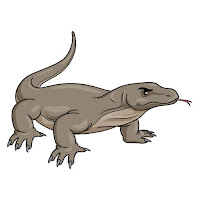
  MOST DANGEROUS LIZARS Lizards are a diverse group of reptiles that belong to the order Squamata, which also includes snakes. They have scaly skin, four legs (except for some legless species), movable eyelids, and external ear openings. They are mostly carnivorous and have various adaptations to avoid predators, such as venom, camouflage, and tail regeneration. There are more than 7,000 species of lizards in the world, living in different habitats and climates. Some of the most well-known lizards are the Komodo dragon, the chameleon, the gecko, and the iguana. Lizards are not dangerous to humans, however, some lizards are poisonous and can harm a person if they are touched or bitten by these reptiles. Certain lizards, such as the Komodo dragon, can grow to large sizes and have been known to attack and kill people. Most lizards, in reality, are harmless to humans, as are most turtles; however, there are certain members of both groups that can kill, maim, make ill, or inflict at...

MOST DANGEROUS LIZARS

Image
  MOST DANGEROUS LIZARS Lizards are a diverse group of reptiles that belong to the order Squamata, which also includes snakes. They have scaly skin, four legs (except for some legless species), movable eyelids, and external ear openings. They are mostly carnivorous and have various adaptations to avoid predators, such as venom, camouflage, and tail regeneration. There are more than 7,000 species of lizards in the world, living in different habitats and climates. Some of the most well-known lizards are the Komodo dragon, the chameleon, the gecko, and the iguana. Lizards are not dangerous to humans, however, some lizards are poisonous and can harm a person if they are touched or bitten by these reptiles. Certain lizards, such as the Komodo dragon, can grow to large sizes and have been known to attack and kill people. Most lizards, in reality, are harmless to humans, as are most turtles; however, there are certain members of both groups that can kill, maim, make ill, or inflict at...

WHALE SHARK: THE LARGEST FISH IN THE WORLD

Image
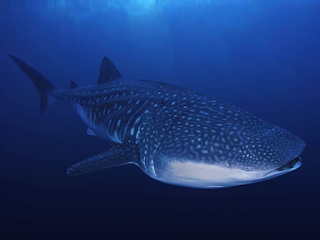
  WHALE SHARK: THE LARGEST FISH IN THE WORLD The largest fish in the world is the whale shark ( Rhincodon typus ) . It is a slow-moving, filter-feeding carpet shark that can grow up to 60 feet in length and weigh up to 21.5 tons. The whale shark is followed by the basking shark, which can grow up to 46 feet in length and weigh up to 5.2 tons. The great white shark and tiger shark are also among the largest fish in the world, with the former growing up to 23 feet in length and weighing up to 3.3 tons 14. The giant oceanic manta ray is another large fish that can grow up to 23 feet in length and weigh up to 3 tons. It is interesting to note that the largest fish that ever lived is the megalodon, an extinct species of megatooth shark that lived approximately 23 to 2.6 million years ago. It is considered to be the largest shark and the largest fish that ever lived, with an estimated length of up to 65 feet. In conclusion, the whale shark is the largest fish in the world, followed...

WORLD FAMOUS ENVIRONMENTAL BOOKS

Image
  WORLD FAMOUS ENVIRONMENTAL BOOKS Environmental books deal with various aspects of the natural world and how humans interact with it. They can be fiction or non-fiction, and cover topics such as conservation, climate change, ecology, sustainability, pollution, biodiversity, and more. Environmental books can inform, inspire, educate, and challenge readers to think critically about the environment and their role in it. There are many environmental books that you can read to learn more about the natural world and the challenges it faces. Here are some of the best environmental books of all time, according to various sources: •              SILENT SPRING by Rachel Carson A classic book that exposed the harmful effects of pesticides on wildlife and human health, and sparked the modern environmental movement. •              THE LORAX by Dr. Seuss A childre...

ERAVIKULAM NATIONAL PARK

Image
 ERAVIKULAM NATIONAL PARK INTRODUCTION In the Indian state of Kerala's Idukki and Ernakulam districts, is the 97 km2 Eravikulam National Park. It was founded in 1978. Eravikulam National Park is well known for the endangered species, Nilgiri Tahr. The flower, Neelakkurinji (Strobilanthes kunthiana ) that bloom once every twelve years is another unique feature of Eravikulam National Park. Other species of animals that live in the park include elephants, gaurs, sambhars, and lion-tailed macaques. HISTORY Before 1971, the Kanan Devan Hills Produce Company oversaw the region as a game preserve. In order to safeguard the habitat of the critically endangered Nilgiri tahr, the Kerala government regained authority in 1971 (Kannan Devan Hill Produce (Resumption of lands) Act, 1971) and established the Eravikulam-Rajamala Wildlife Sanctuary in 1975 by Government order No. 8907/FM/375/AD dated 31.03.1975 and elevated as National Park by G.O(MS)No.142/78 dated 19.05.1978. GEOGRAPHICAL FEAT...

PEPPARA WILDLIFE SANCTUARY

Image
 PEPPARA WILDLIFE SANCTUARY INTRODUCTION In 1983, the Peppara Wildlife Sanctuary was established pursuant to GO (P) No. 379/83/AD dated December 21, 1983, following the construction of the Dam by the Kerala Water Authority at Peppara for the purpose of providing drinking water to the city and surrounding districts of Thiruvananthapuram. Neyyar Wildlife Sanctuary, Agastyvanam Biological Park, Paruthippally Range, Bonacord Tea Estate, and the Kalakkadu Mundanthurai Tiger Reserve in Tamil Nadu are all located on either side of this sanctuary. The sanctuary covers 53 square kilometers of forest and includes the Peppara reservoir. HISTORY The region was formerly a part of Thiruvananthapuram Forest Division's Paruthipally Forest Range. The sanctuary is tucked away in the southern Western Ghats' western slope and is a component of the Agastyamala Biosphere Reserve. This sanctuary is bordered by Kalakkadu Mundanthurai Tiger Reserve of Tamil Nadu in the east, Neyyar Wildlife Sanctua...

IDUKKI WILDLIFE SANCTUARY

Image
 IDUKKI WILDLIFE SANCTUARY INTRODUCTION Idukki Wildlife Sanctuary is situated in the Idukki district of Kerala. The Idukki Wildlife Sanctuary, which is located near the catchment region of Idukki Dam, is home to a diverse range of plants and animals. The fauna in the area has suffered severe harm as a result of the removal of hectares of rainforest for the Idukki hydropower project. The Idukki Wildlife Sanctuary spans the taluks of Thodupuzha and Udumbanchola. In accordance with a government order dated 9 February 1976 with the number GO.7898/FM3/76/AD, the area was designated as a wildlife sanctuary. HISTORY About 27 square kilometers of forest in the then-Kottayam division were clear-cut for the construction of the Idukki Hydroelectric Project in the 1960s. A portion of the forest region was isolated by the dam's surrounding reservoir after Idukki Dam's commission in 1976. On September 2, 1976, this region was designated as a wildlife sanctuary with the goal of conserving...

PARAMBIKULAM TIGER RESERVE

Image
 PARAMBIKULAM TIGER RESERVE INTRODUCTION Kerala's Palakkad and Thrissur districts are home to the Parambikulam Tiger Reserve. This sanctuary was constituted by Government order No. G.O.(P)139/73/AD dated 12.02.1973 and later it was declared a tiger reserve by Government order No. G.O.(P) 53/2009/F&WLD dated 16.12.2009. It is encircled by the Anamalai Tiger Reserve in the east, Vazhachal Forest Division in the south, Chalakudy Forest Division in the west, and Nemmara Forest Division in the north. Its total area is 412.5 sq. km for the buffer and 231.16 sq. km for the center. Thus, Parambikulam Tiger Reserve has a total size of 643.66 Sq km. Parambikulam, Thunakadavu, and Peruvanpallam are its three reservoirs. HISTORY During the 19th century, the forested areas of Parambikulam were administered as the Sungam Forest Reserve and Parambikulam Forest Reserve. Porter's initial management plan for the Sun gam Reserve Forest, published in 1886, marked the beginning of extensive...

Reconnect with Nature

Image
  Breaking the Barrier: How to Reconnect with Nature and Improve Your Well-being As a society, we have become increasingly disconnected from nature. Our busy lives and reliance on technology have taken us away from the natural world around us. However, reconnecting with nature is essential for our well-being. In this article, I will explore the importance of nature in our lives, the benefits of spending time in nature, the impact of technology on our connection with nature, and tips for incorporating nature into your daily routine. I will also share outdoor activities to try for better well-being, mindful practices to enhance your nature experience, the healing power of nature on mental health, and resources for finding nature near you. The Importance of Nature in Our Lives Nature is a fundamental part of our lives. It provides us with food, water, and shelter. It also has a significant impact on our physical and mental health. Studies have shown that spending time in natur...

Ecological importance of Komodo dragon

Image
 E cological importance of  Komodo dragon The Komodo dragon holds significant ecological importance in its native habitat. Here are some key aspects of its ecological role: Apex Predator: As the top predator in its ecosystem, the Komodo dragon helps regulate prey populations, maintaining a balance in the food chain. Its presence helps control the numbers of herbivores such as deer and wild boar, preventing overgrazing and ecosystem disruption. Scavenger and Carrion Consumer: Komodo dragons are adept scavengers, feeding on carrion and carcasses. By consuming dead animals, they help recycle nutrients back into the ecosystem, playing a vital role in nutrient cycling. Indicator Species: The Komodo dragon serves as an indicator species for the overall health of its habitat. Its presence or absence can reflect the state of the ecosystem, as it requires a relatively intact and well-functioning environment to thrive. Monitoring Komodo dragon populations can provide insights into...

The majestic banyan tree

Image
The majestic banyan tree      The majestic banyan tree is a natural wonder that has captured the attention of nature enthusiasts and environmentalists alike. This tree species, which is native to India and other parts of Asia, is known for its impressive size and unique growth patterns. In fact, the banyan tree is considered sacred by many cultures and is often considered a symbol of strength, longevity, and resilience. But beyond its cultural significance, the banyan tree is also an important environmental boon. It provides shelter and food for a variety of animals, helps to prevent soil erosion, and even has medicinal properties. In this article, we'll take a closer look at this incredible tree and explore why it's worth celebrating and protecting. So, grab a cup of tea and join us on a journey to discover the many wonders of the majestic banyan tree.  

The Alarming Decline of Penguins: Causes and Solutions

Image
  The Alarming Decline of Penguins: Causes and Solutions As a lover of nature and wildlife, the decline of penguin populations is a topic that is particularly close to my heart. These adorable and charismatic birds are not only fascinating to observe, but they also play a crucial role in the Antarctic ecosystem. Unfortunately, their numbers have been rapidly decreasing in recent years, due to a range of human-induced factors. In this article, I will explore the causes of this decline, the impact it has on the environment, and the solutions that can be implemented to protect these amazing creatures. The importance of penguins in the ecosystem Penguins are one of the most iconic species in the Antarctic ecosystem and an important part of the food chain. They are a key indicator species, meaning that their population trends can provide valuable information about the overall health of the ecosystem. Penguins are also efficient predators and are able to catch large quantities of f...